What is Bittensor?
Strangers compete to do useful work, the work gets measured, and better work earns more.
Somewhere right now, one stranger is forecasting tomorrow's weather. Another is storing files for strangers across the world. A third is turning a written description into an image. Nobody hired them, and no company pays them. The network itself does, and its money is called TAO.
That is Bittensor. If you have never heard of cryptocurrency, good, you will not need it.


An incentive is a reward for work
Promise a reward and work appears that nobody would do otherwise. Offer a prize for jumping and people will jump all day. Pay for rides at midnight and drivers appear at midnight. That is what an incentive is, a reward that summons work.
The stronger the reward, the harder people work for it, and if the reward goes to whoever does the work best, they race each other to be best. This is what convinced strangers to build Bitcoin, and what makes Bittensor possible.

You already work for a reward
You work for a paycheck because money buys what you need. You can pay other people with it, and they accept it because they can use it to pay others. That chain is what makes money the one reward that works on everyone, for anything.
For that to work, the money cannot be free to create. Nobody would trade for something anyone can print at will.
With cash this is easy to see. If you hand over a banknote, you no longer have it. You cannot spend that same note again. In bank accounts the money is numbers, and the bank prevents copying by updating a record of who owns what whenever money moves.

Money made of numbers is easy to copy
On the internet, copying is easy. If you send a photo or a file, you still keep your own copy. That works for sharing, but it breaks when the money is the file.
If you could copy money as easily as a photo, you could pay yourself again and again. When anyone can duplicate money for free, it stops being money.
Banks solve this by keeping records they control and checking each payment. This works, but running competitions among strangers on the internet needs something different. Strangers need to verify results themselves without trusting a single party.
A blockchain is a shared record nobody owns
Many independent computers each keep a copy of the same record. When a new entry arrives, every computer checks it against the same rules.
Only entries that a majority accept get added. Changing a past entry would mean rewriting it on most of those computers at once, and they belong to strangers.
This solves the copying problem. Strangers can check every entry themselves, without trusting any single party. But why would anyone run these computers?
Bitcoin rewards one kind of work
Bitcoin combined the blockchain with an incentive. Every ten minutes there is a race to add the next entry, and whoever wins writes themselves a reward of new bitcoin, set by rules no one can change. Anyone on Earth with hardware and electricity can enter the race.
The more people race, the more machines hold the record, and the more electricity it would cost anyone to rewrite it.
And it worked. For the first time, money made of numbers needed no company or bank behind it, and nobody could print more.

Bitcoin became the largest computer on Earth
It started sixteen years ago with ordinary computers on desks. Today, machines built only for this fill warehouses in every country with cheap electricity, and together they draw as much power as a mid-sized nation.
Added together, they are the largest supercomputer on Earth, with hundreds of times more computing than the biggest technology companies combined. Nobody designed or owns it, and nobody was hired to build it. A reward and a rule assembled the largest machine humanity has ever built, almost by accident.
And all that power produces hashes, numbers with no use beyond proving the work was done.
Bittensor starts with one question. What if a machine like that were pointed at useful work?
Bittensor rewards many kinds of useful work
Bitcoin runs one race, forever, on purpose. Bittensor takes that design and opens the race to any work that can be scored. Burning more electricity does not win its competitions. Doing the work better does, so they pay for talent as well as hardware.
Nobody tells the competitors how. A competition only picks the test and pays whoever passes it best, and somewhere, someone sends in something better.
More than a hundred of these competitions run at once on Bittensor, and anyone can use what they produce. The forecasts, storage, computing and models are all out in the open, and the competition keeps making them better and cheaper.
A subnet is one competition inside Bittensor
What it is
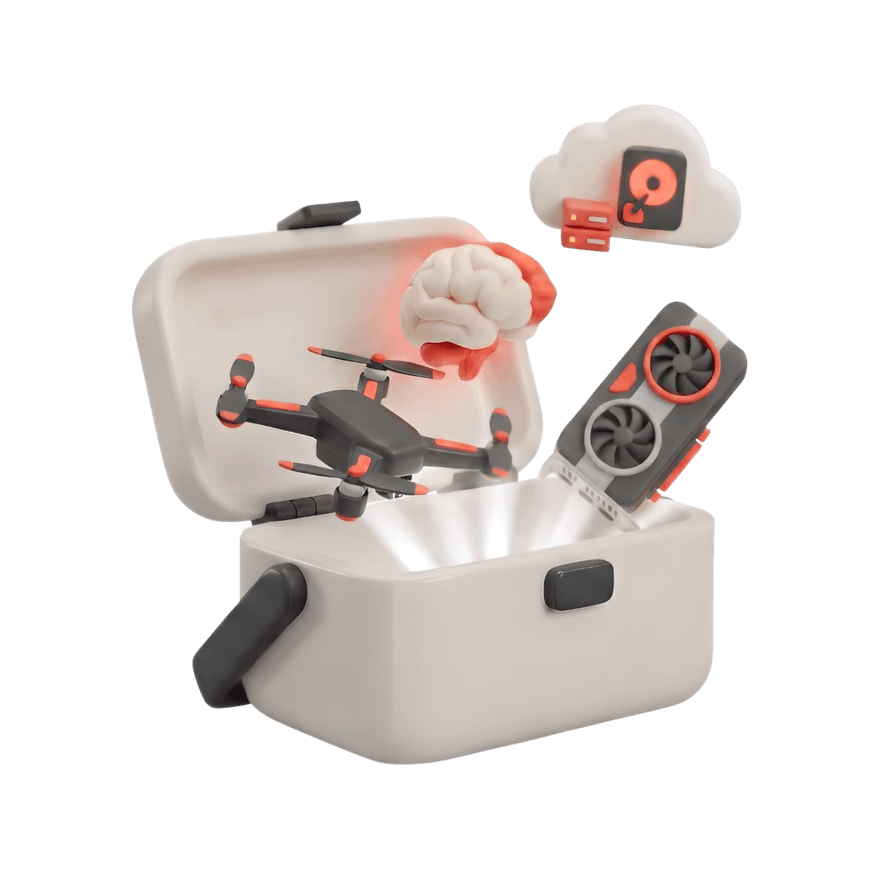
One subnet forecasts the weather. Another stores the files, a third turns written descriptions into images, and one trains models to fly drones. Each is one competition with its own rules for what counts as good work, and a subnet can be built around anything that can be measured.
Anyone can create one. You describe the work you want done and how to judge it, and the pay comes from the network itself, minted the way Bitcoin mints. Once it runs, strangers all over the world compete to do it.
How it works
Take the weather subnet. Some people submit tomorrow's forecast. Others check it, when tomorrow comes, against the sky itself. The closest forecasts earn the most, and nobody asks who made them or where they live.
Every subnet runs the same loop with its own work and its own checks, and the scores decide who earns what. Over time, the weakest drop out, better ones take their places, and today's best is only best until tomorrow.

Subnet Owner/s
Create the task and set the incentive.

Miners
Compete to complete the work.

Validators
Measure the work and score it.

TAO is the currency of Bittensor
We started with incentives. Rewards make people work. But what is the reward?
In Bitcoin, the reward is bitcoin. Bitcoin is both the blockchain and its currency. It creates its own money, and pays it only for the work that keeps it running.
Bittensor works the same way. Its money is TAO. There will only ever be 21 million, and all of it is won. It is hard to earn and easy to send.
It is the money the strangers on Bittensor are working for right now.
Why build it in the open
Oil went to Rockefeller, search went to Google, the feed went to Facebook. Right now, a few companies are gathering the computing and the data that everything new will be built from. If nothing changes, they will own whatever comes next, and everyone else will rent it.
But the internet, the network underneath every website, has no owner. No company runs it, and anyone can build on it without asking. Bitcoin took the next step, a network nobody owns that carries money, and pays the strangers who keep it running. Bittensor takes the step after that, a network nobody owns that pays for work. Any work that can be measured can be paid for, in the open, owned by the people who build and use it.
How will you take part?
Nobody has to approve you to take part. There are three ways to begin, so start with the one that fits you now.
Take a lesson
Each lesson picks one idea and breaks it into steps. You read, you interact, and by the end it clicks. The first one begins with an apple.
Own TAO
Get TAO and put it behind the subnets you believe in. When they earn, you earn.
Build something
Long-form courses that take one project from start to finish, until it runs.