Emissions
Newly created ALPHA tokens distributed to incentivize subnet participants and TAO emitted to subnets based primarily on their EMA price. Emissions solve the fundamental problem of making the desired work financially profitable in a protocol like Bittensor.
What are Emissions?
Emissions are newly created tokens distributed every block (approximately every 12 seconds). In a protocol like Bittensor, participants must have a financial reason to contribute. Emissions provide those incentives to participants for the desired work.
Within each subnet, ALPHA emissions incentivize miners, validators, and subnet owners for doing the desired work. At the same time, TAO emissions get injected into subnet pools based on a few factors, starting with each subnet's EMA price. Subnets with a higher EMA price tend to receive more TAO emissions, making them more attractive and attracting better participants.
Through these emissions, the blockchain makes it financially rational for it's participants to work honestly and for market participants to accurately assess what work is valuable.
How TAO Emissions Work
Each subnet receives a proportional share of the TAO emissions from each block. That share starts from the subnet's EMA price, and is then adjusted by two more factors.
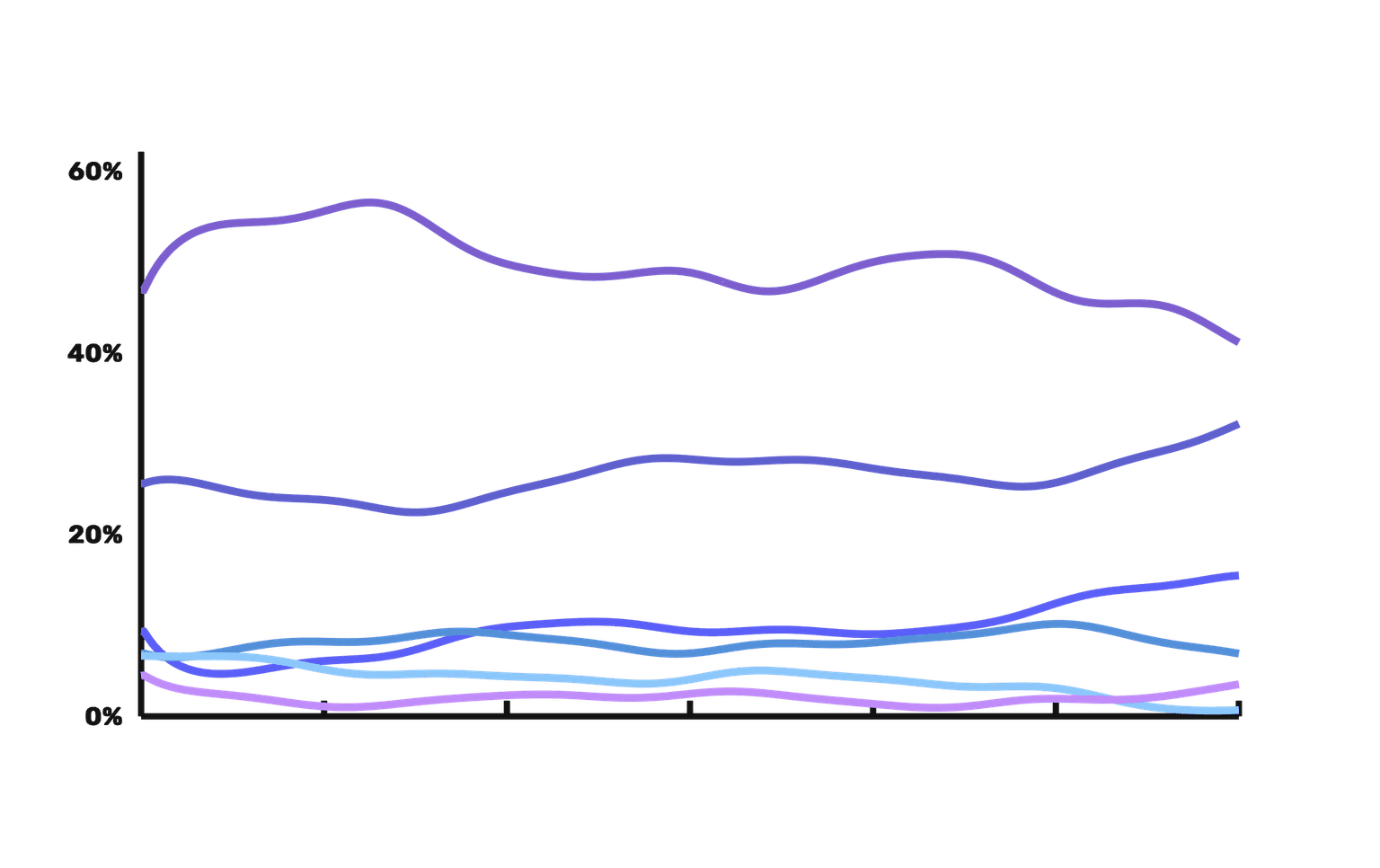
The EMA price is a smoothed average rather than the spot price, so temporary single-block volatility can't disrupt the TAO emissions. On its own, a higher EMA price means a larger share, but the following factor below can raise or lower it:
its miner burn, which lowers the share for subnets that withhold emissions from their miners.
The formula for a subnet's share using this method is:
A subnet with a low EMA price, and a high miner burn simply receives a smaller share of the TAO emissions.
TAO and ALPHA Injections
The TAO emission for each subnet gets injected into the subnet's pool. Based on the TAO emission and the current ALPHA price, a corresponding amount of ALPHA gets injected to keep the ALPHA price the same.
These injections act as liquidity for the subnet's pool and are not owned by anyone. When the ALPHA price significantly exceeds the subnet's TAO emission share, less ALPHA gets injected.
The amount that can be injected as liquidity is capped by the subnet's root proportion. Because root proportion shrinks as a subnet matures, less of the TAO emission is added as liquidity over time. The leftover TAO is instead used to buy ALPHA from the subnet's pool, often referred to as Chain Buys.
How ALPHA Emissions Work
ALPHA emissions are distributed to subnet participants for their contributed work. Each subnet receives ALPHA emissions independently from its TAO emissions. The ALPHA emitted always equals the full block emission of ALPHA. This ensures that participants receive emissions regardless of whether TAO emissions are injected into the subnet's pool.
The distribution of ALPHA emissions follows these steps:
18% is being deducted for the subnet owner
41% goes to validators as dividends
0-41% go to root validators (based on the root proportion)
The remaining ALPHA dividends go to the subnet validators
41% goes to miners as incentives
Updated