Locked Stake
A feature that lets any staker commit their stake on a subnet for a set period of time to build "conviction." The staker with the highest conviction score can become the owner of that subnet.
DRAFT PROPOSAL: BIT-0011
Locked Stake is not live on Bittensor. This page describes a draft proposal (BIT-0011) that is currently being discussed. The implementation and design may change or will be replaced completely.
Some subnets on Bittensor become inactive over time. Their owners stop managing them, which creates a problem of abandoned subnets, that can be taken over by bad actors, and wasting storage on the blockchain.
Locked stake solves this by making subnet ownership a contest of commitment. Anyone can challenge for ownership of a subnet by locking a significant amount of stake. This gives active, motivated participants a path to take over neglected subnets and put them to better use.
To lock stake, a staker has to choose how much stake (ALPHA) to lock, and for how long (measured in blocks ).
Once locked, that stake is committed for the chosen duration. The staker cannot withdraw the locked portion until their conviction score reaches 0. The lock cannot be set to reduce the staker's current conviction, only to increase it or extend it.
LOCK DURATION
The duration of a lock is expressed in blocks, with a minimum lock duration. Very short locks are not permitted.
Conviction is a score that reflects how much stake is locked and for how long it still has to run. It starts at 100% of the locked ALPHA amount at the moment the lock is created, then decreases linearly down to 0 by the time the lock expires.
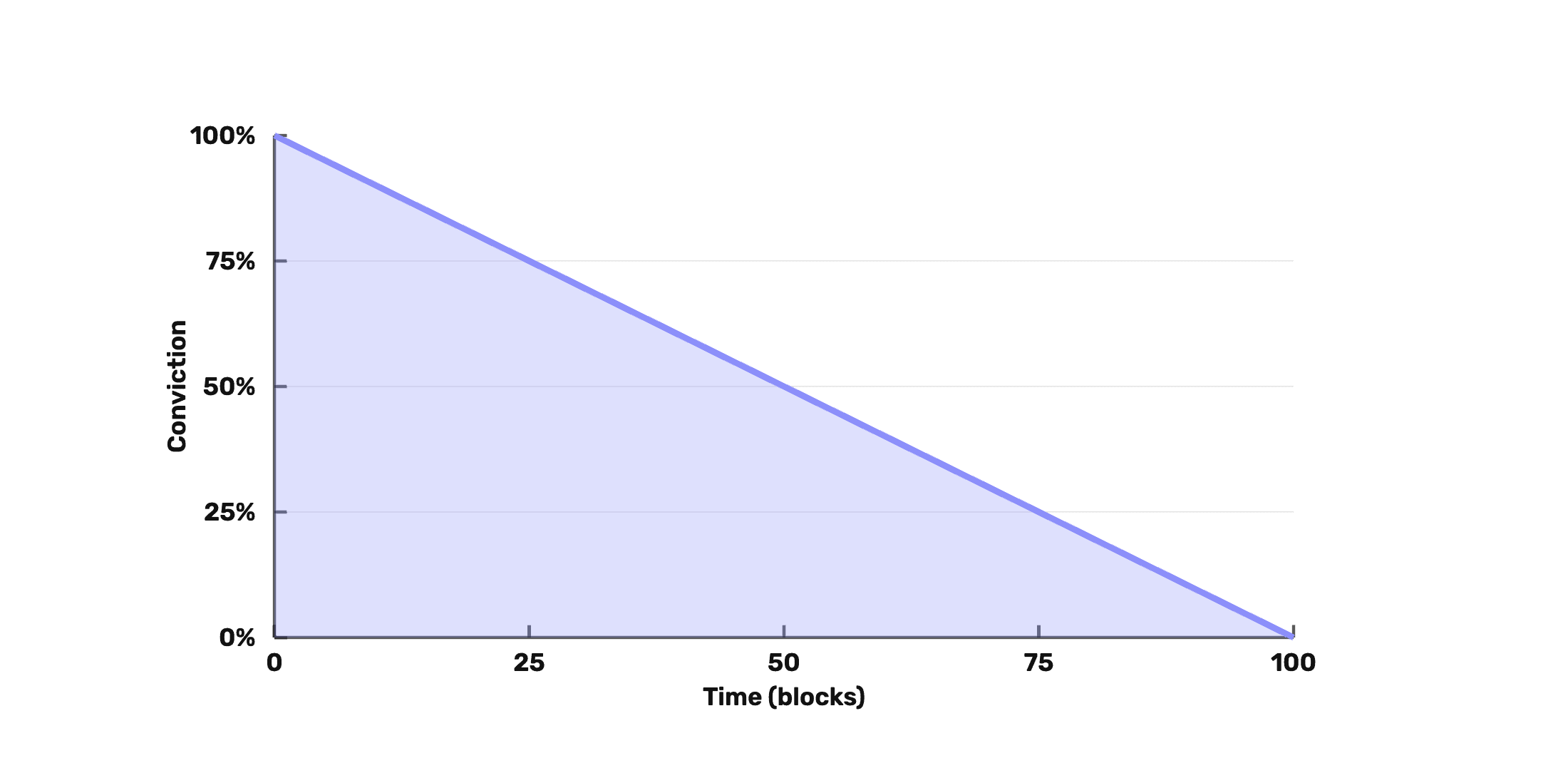
This linear decay rewards participants who commit early and for longer periods, while naturally reducing the influence of locks that are about to expire.
LOCKING MORE OR LONGER
You can always re-lock to increase your conviction, either by locking more stake, extending the duration, or both. You cannot make a change that would lower your current conviction score.
Conviction scores change continuously as locks approach expiry. To prevent sudden ownership changes, the protocol uses a Conviction EMA (Exponential Moving Average), which is a smoothed version of each staker's conviction over time.
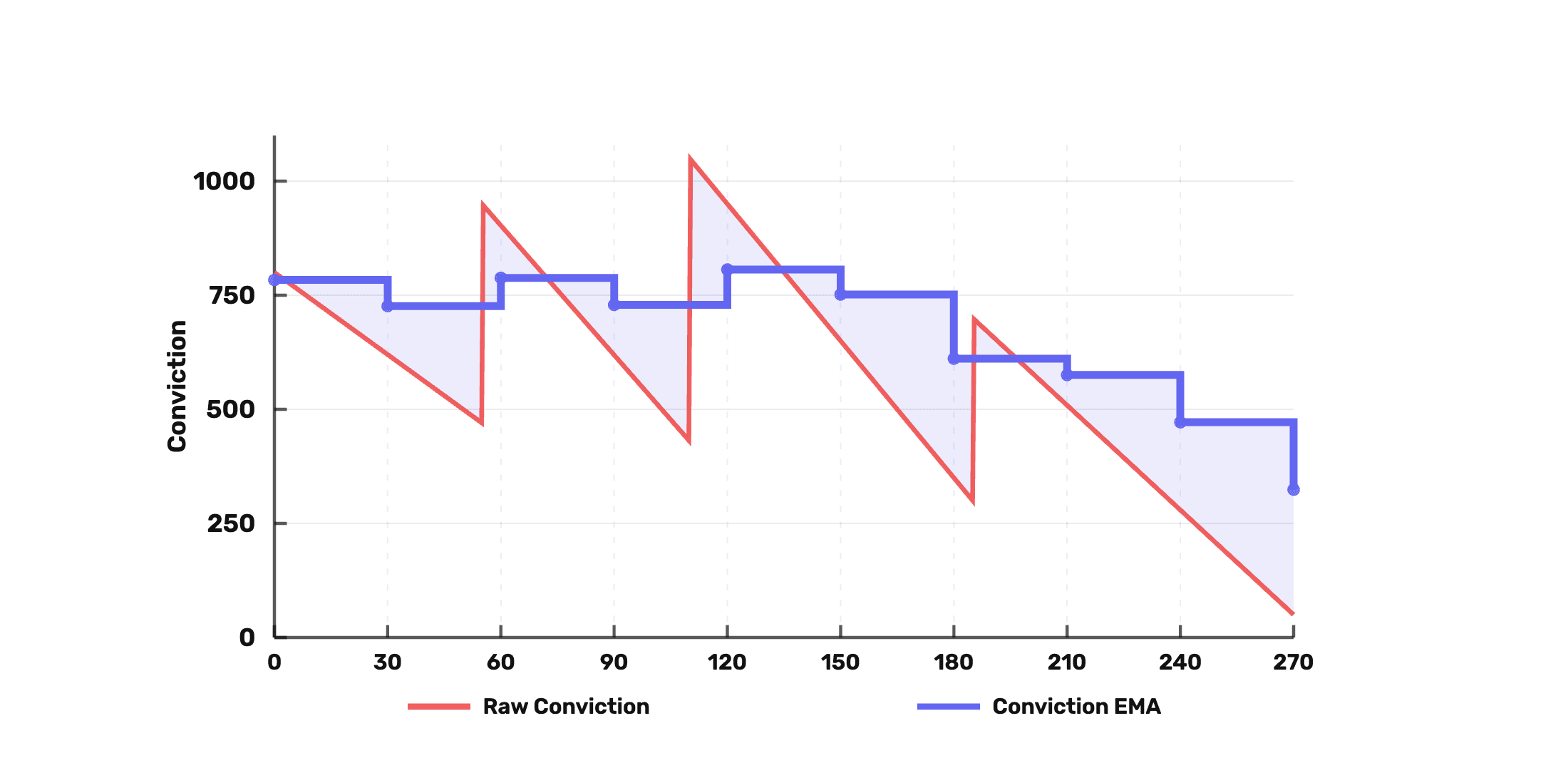
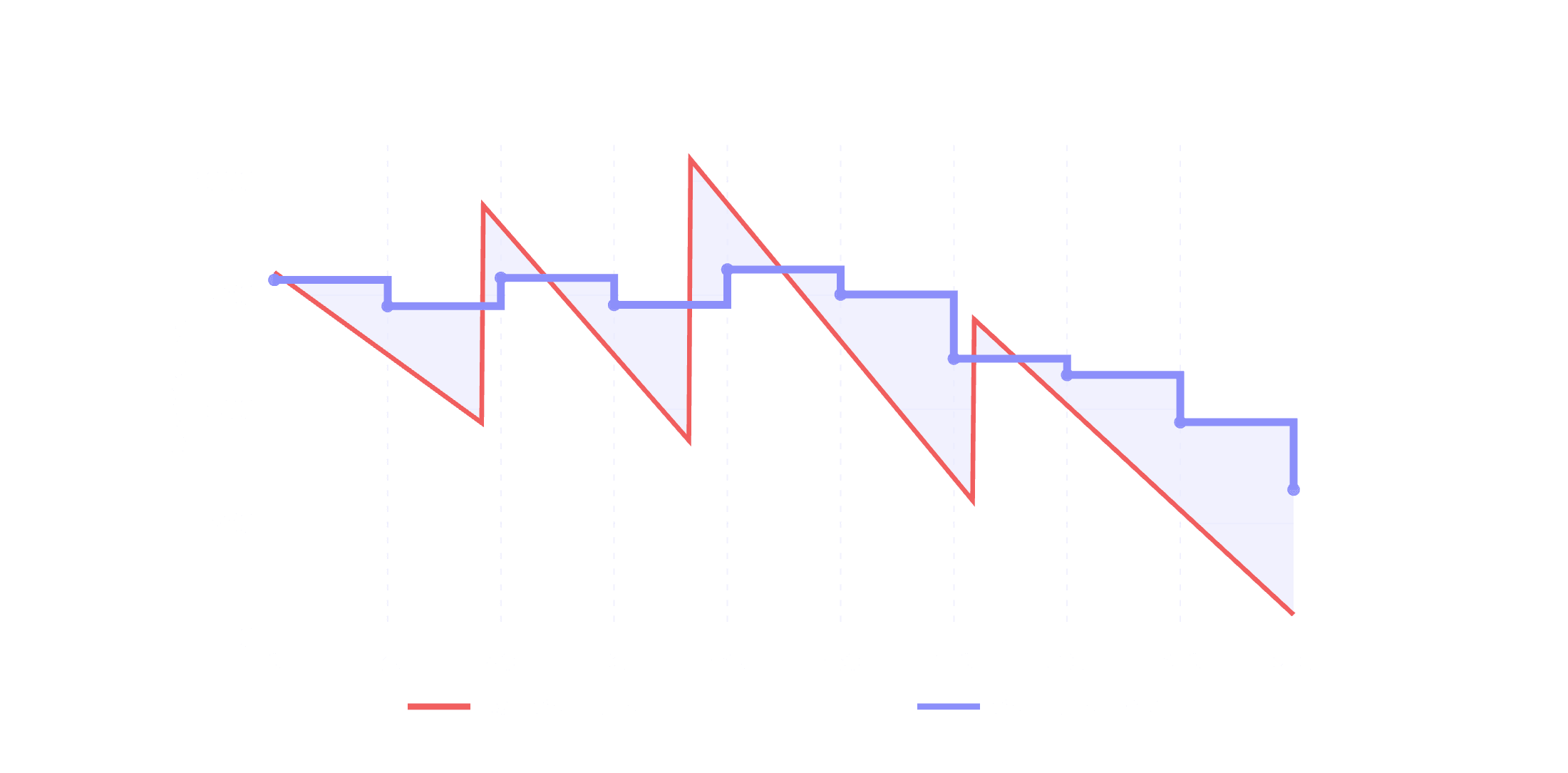
The Conviction EMA is updated approximately once every 30 days. During each update, the current conviction is blended with the historical EMA. This smoothing gives the existing subnet owner time to respond before ownership can transfer to a "challenger".
Every 30 days, the protocol checks all conviction EMAs for each subnet. The staker whose conviction EMA is the highest becomes the new subnet owner.
There is a minimum total conviction threshold. If total locked conviction across all stakers on a subnet is too low, no ownership transfer happens. In the rare case of a tie, the protocol selects a winner using a fixed neutral rule that neither party can influence.
This mechanism ensures that only participants with genuine, sustained commitment can control a subnet. It raises the cost of owning a subnet from a one-time registration cost to an ongoing stake commitment, making ownership meaningful.
Locked stake cannot be freely withdrawn. At any given block, only the unlocked portion of a staker's ALPHA is available to unstake.
The unlocked portion equals the total stake minus the current conviction score. As the lock approaches its expiry, the conviction score falls toward zero and the available unlocked portion grows accordingly. Once a lock expires and conviction reaches zero, the lock is automatically removed and the full stake becomes available to unstake again.
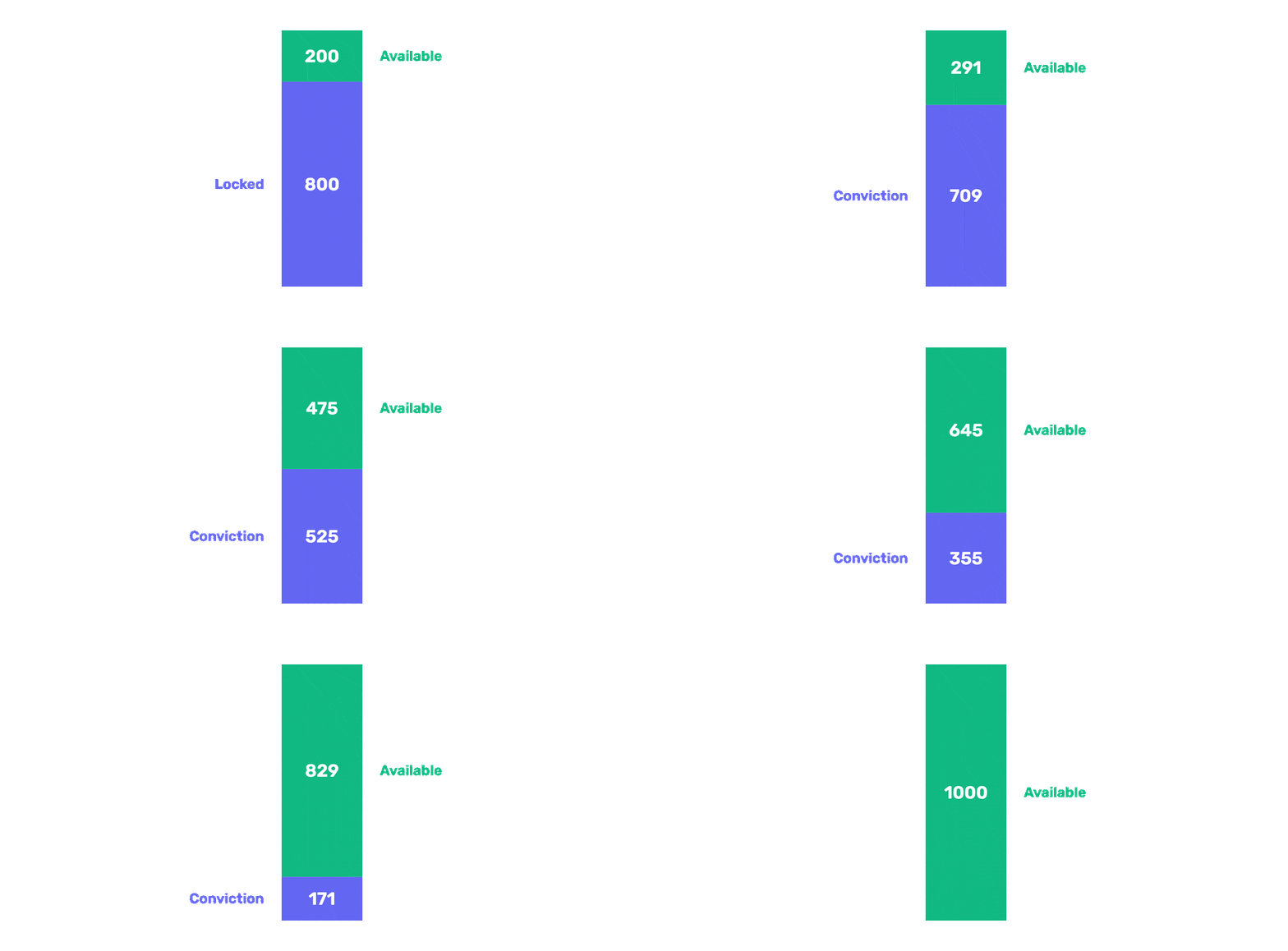
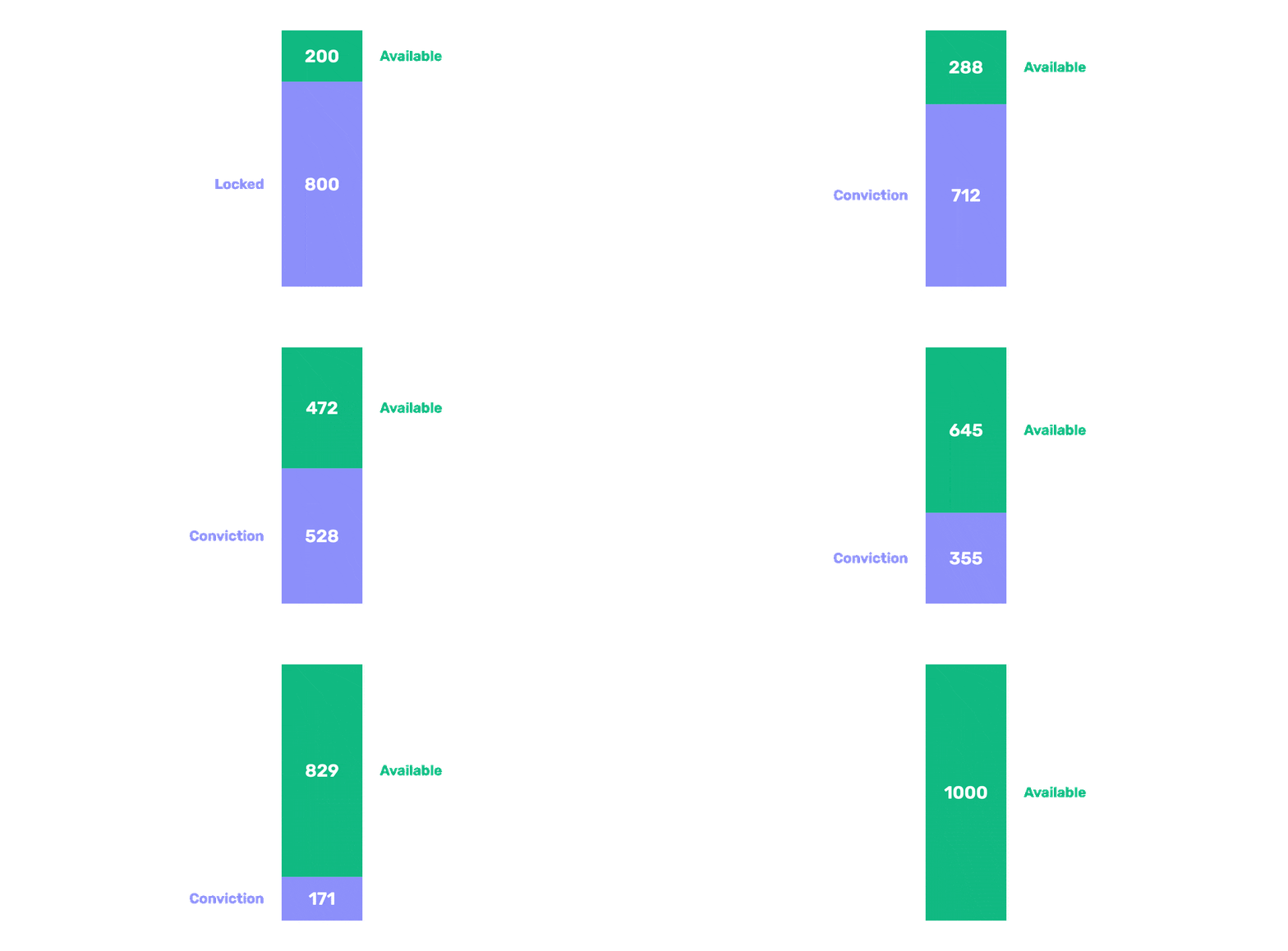
As an example when you have 1,000 ALPHA staked and lock 800 ALPHA for 100 days. 50 days in, your conviction is at 50% and thus 400 ALPHA, meaning you can unstake up to 600 ALPHA (1,000 − 400). At expiry, conviction is 0 and all 1,000 ALPHA is available again.